

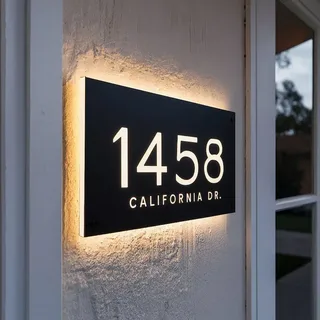
Your house sign is more than just a nameplate. It helps visitors find your home, improves curb appeal, and adds personality to your property. Whether you own a modern home, a traditional house, or even a business property, choosing the right house sign can make a big difference.
One of the biggest decisions homeowners face is whether to choose an illuminated house sign or a non-illuminated house sign. Both options have their own advantages, design styles, and practical uses. Some people prefer the sleek and modern appearance of illuminated signs, while others love the timeless charm of classic non-lit house signs.
But which one is actually better?
The answer depends on your budget, location, visibility needs, and personal style. In this guide, we’ll compare illuminated vs non-illuminated house signs in detail so you can decide which option is the perfect fit for your property.
What Are Illuminated House Signs?
Illuminated house signs are signs that include built-in lighting, usually LED lights, to make the sign visible during the night or in low-light conditions. These signs are becoming increasingly popular in modern homes because they combine functionality with stylish design.
Most illuminated signs are powered by:
- LED lighting
- Solar energy
- Low-voltage electrical systems
They are commonly made from materials like:
- Acrylic
- Stainless steel
- Aluminium
- Slate with LED backing
Benefits of Illuminated House Signs
1. Better Visibility at Night
One of the biggest advantages of illuminated house signs is visibility. If your home is difficult to locate at night, a lit sign makes it much easier for guests, delivery drivers, and emergency services to identify your property quickly.
This is especially useful for:
- Homes on dark streets
- Rural properties
- Large driveways
- Commercial buildings
2. Modern and Premium Appearance
Illuminated signs instantly create a modern and sophisticated look. LED house signs often give properties a luxury feel that stands out from traditional signage.
If you want your home exterior to look stylish and contemporary, illuminated signs are a strong option.
3. Increased Safety and Convenience
A clearly visible house number can improve safety. Emergency responders can locate your property faster during urgent situations. Delivery services also benefit from easier identification.
4. Energy Efficient Options
Modern LED illuminated signs use very little electricity. Solar-powered house signs are also available, making them environmentally friendly and cost-effective in the long run.
Drawbacks of Illuminated House Signs
While illuminated signs offer many benefits, they also have some disadvantages.
1. Higher Cost
Illuminated house signs are usually more expensive than non-illuminated ones because they include lighting components and electrical systems.
The installation cost may also increase if wiring is required.
2. Maintenance Requirements
LED systems are durable, but illuminated signs may eventually need maintenance or replacement parts. Solar-powered options can also become less effective over time if exposed to poor weather conditions.
3. Power Dependency
Electrical illuminated signs rely on a power source. If there is a power outage, the lighting may stop working temporarily.
What Are Non-Illuminated House Signs?
Non-illuminated house signs are traditional signs without built-in lighting. They rely on natural daylight or nearby outdoor lighting for visibility.
These signs are available in a wide range of materials and designs, including:
- Slate house signs
- Wooden plaques
- Metal signs
- Acrylic nameplates
- Ceramic signs
They are one of the most common choices for residential properties because of their simplicity and affordability.
Benefits of Non-Illuminated House Signs
1. Affordable and Budget-Friendly
Non-illuminated signs are generally much cheaper than illuminated options. They are ideal for homeowners who want a stylish sign without spending too much money.
2. Classic and Timeless Design
Traditional house signs offer a clean and elegant appearance. They work especially well with:
- Vintage homes
- Rustic properties
- Traditional architecture
- Cottage-style houses
Slate and wooden signs remain popular because they blend naturally with outdoor surroundings.
3. Low Maintenance
Since non-illuminated signs have no electrical components, they require very little maintenance. Once installed, they can last for years with minimal upkeep.
4. Easy Installation
Most non-lit signs are simple to install and do not require electrical wiring or professional setup.
Drawbacks of Non-Illuminated House Signs
1. Limited Night Visibility
The main disadvantage is reduced visibility after dark. If your street lighting is poor, visitors may struggle to locate your property at night.
2. Less Modern Appearance
While many traditional signs look elegant, they may not provide the sleek and premium look that illuminated signs offer.
Illuminated vs Non-Illuminated House Signs: Key Differences
| Feature | Illuminated House Signs | Non-Illuminated House Signs |
| Visibility at Night | Excellent | Limited |
| Style | Modern and premium | Classic and traditional |
| Cost | Higher | Lower |
| Maintenance | Moderate | Low |
| Installation | More complex | Easy |
| Energy Usage | Requires power or solar | No power needed |
| Best For | Modern homes and businesses | Traditional homes |
Which House Sign Is Better for Your Home?
The best choice depends on your needs and preferences.
Choose Illuminated House Signs If:
- Your property is hard to locate at night
- You want a modern exterior design
- You prefer premium curb appeal
- You run a business property
- You want better visibility for deliveries and visitors
Choose Non-Illuminated House Signs If:
- You prefer a traditional or rustic look
- You want a lower-cost option
- Your property already has good outdoor lighting
- You want minimal maintenance
- You prefer a simple installation
Best Materials for House Signs
No matter which type you choose, selecting the right material is important for durability and appearance.
Popular Materials Include:
Slate
A timeless and elegant option known for durability and weather resistance.
Acrylic
Modern, lightweight, and perfect for illuminated signs.
Stainless Steel
Strong, sleek, and ideal for contemporary homes.
Wood
Great for rustic and cottage-style properties.
Aluminium
Durable, lightweight, and resistant to rust.
Final Verdict
Both illuminated and non-illuminated house signs have their own strengths. Illuminated signs are ideal for homeowners who want enhanced visibility, modern style, and a premium appearance. Non-illuminated signs, on the other hand, are affordable, timeless, and easier to maintain.
If visibility and modern aesthetics matter most, illuminated house signs are usually the better choice. But if you prefer simplicity, tradition, and budget-friendly options, non-illuminated signs remain an excellent investment.
The right choice ultimately depends on your home style, budget, and personal preference.
FAQs
1. Are illuminated house signs expensive to run?
No, most modern illuminated house signs use energy-efficient LED lighting, which consumes very little electricity.
2. Do illuminated house signs work in bad weather?
Yes, high-quality illuminated signs are designed to withstand rain, snow, and outdoor weather conditions. However, choosing weather-resistant materials is important.
3. Which house sign lasts longer?
Both illuminated and non-illuminated signs can last for many years if made from durable materials like slate, aluminium, or stainless steel.
4. Are non-illuminated house signs still popular?
Yes, non-illuminated house signs remain very popular because of their classic appearance, affordability, and low maintenance requirements.
5. What is the best material for a modern house sign?
Acrylic, stainless steel, and aluminium are among the best materials for modern-style house signs, especially for illuminated designs.